

Machu Picchu Mountain holds countless secrets, and when exploring curious facts about Machu Picchu Mountain, travelers and history lovers discover details that enrich their experience before visiting. In this text, you’ll find real, accurate, and updated information that allows you to appreciate this Andean wonder from a new perspective. Throughout the article, you’ll find at least ten natural mentions of “curious facts about Machu Picchu Mountain,” as well as integrated related keywords such as “historical curiosities of Machu Picchu Mountain,” “legends about Machu Picchu Mountain,” and “scientific data about Machu Picchu Mountain.” The tone is tourist-friendly, informative, and clear, with smooth transitions for easy reading.
Historical Curiosities of Machu Picchu Mountain
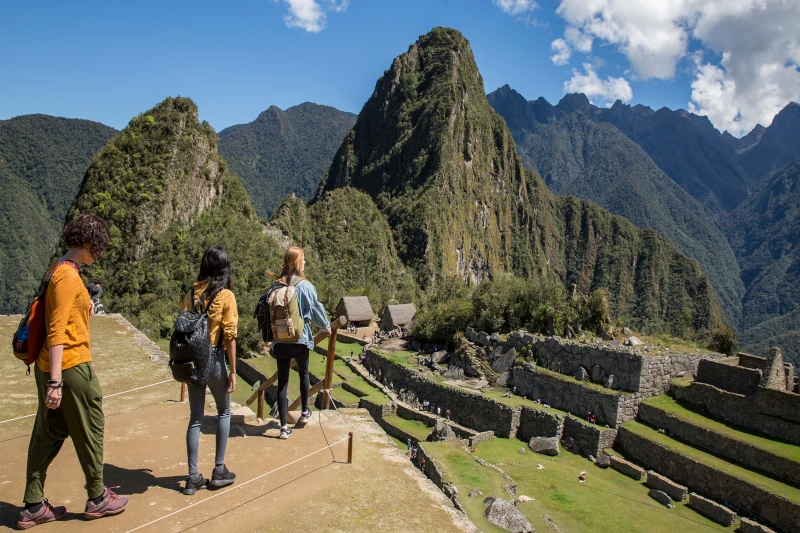
When exploring curious facts about Machu Picchu Mountain, one of the first things that stands out is its construction and use by the Inca civilization. The mountain itself—although often associated with the famous citadel—was chosen by the Incas for reasons that combined strategy, spirituality, and technical mastery. Machu Picchu Mountain, located in the Cusco region, lies between two main peaks: Machu Picchu (which gives the site its name) and Huayna Picchu. This “saddle” position along the ridge allowed the Incas to harness their surroundings effectively. Therefore, one of the first curious facts about Machu Picchu Mountain is that the Incas chose its location deliberately, reflecting their understanding of geography, energy, and cosmology.
Among historical findings, the citadel may have served as a retreat for Incan nobility, with ceremonial, agricultural, and defensive functions.This link between the settlement and Machu Picchu Mountain reveals its broader purpose beyond refuge. The site was integrated with the surrounding landscape, the waters, valleys, and Incan roads. Another remarkable fact is that about 150 buildings once stood on the mountain’s elevated area. Many were aligned for ceremonial and agricultural use. All this forms part of the essential curious facts about Machu Picchu Mountain that help explain its magnificence.
Spiritual Meaning of Machu Picchu Mountain and Legends About It
Machu Picchu Mountain was not only a settlement but also a sacred space where nature and cosmology were intertwined. Among the curious facts about Machu Picchu Mountain is the Incan belief that each mountain, or apu in Quechua, was a living being protecting the valley and its people. In this sense, Machu Picchu Mountain had a spiritual role. Its high position above the Urubamba River canyon symbolized a strong link with nature.
Legends about Machu Picchu Mountain mention that Incas and shamans believed the site held special energies, reinforcing its sacred significance. Some local guides speak of intense telluric currents within Machu Picchu Mountain, perceived by ancient people as “earth energy.” Among the curious facts about Machu Picchu Mountain, it is said that the Incas built canals, terraces, and platforms that served both functional and symbolic purposes. This dual role—practical and sacred—makes the mountain a living testimony to Incan worldview.
One of the little-known secrets of Machu Picchu Mountain is a carved rock known as the “Sacred Rock,” where some visitors climb to “receive energy.” This practice has deep ancestral roots. Another significant detail among the curious facts about Machu Picchu Mountain is the alignment of structures with celestial bodies, such as the Southern Cross constellation, used to mark agricultural or ritual calendars. These details reaffirm the cultural importance of Machu Picchu Mountain.
Archaeological Discoveries and Mysteries of Machu Picchu Mountain
When analyzing curious facts about Machu Picchu Mountain, it’s impossible to ignore the archaeological discoveries that have revealed surprising aspects of the mountain and its surroundings. One of the most striking findings is the vast network of geological faults beneath the site—a true mystery of Machu Picchu Mountain. Recent studies show that the Incas deliberately built on tectonic intersections that aided construction and drainage. These archaeological discoveries in Machu Picchu Mountain explain the precise orientation of many structures.
Additionally, among the curious facts about Machu Picchu Mountain, about 60% of its infrastructure lies below ground level. The inner mountain holds foundations, drainage systems, and walls uncovered only recently. This poses another mystery of Machu Picchu Mountain: much remains hidden underground. The Incan stone-cutting technique, with perfectly fitted blocks and no mortar, demonstrates advanced engineering that took advantage of the mountain’s geology.
When comparing Machu Picchu Mountain with other sacred peaks, it stands out for its combination of sanctuary, observatory, and agricultural hub. Thus, these archaeological discoveries in Machu Picchu Mountain enrich the traveler’s understanding and appreciation of the site.
Scientific Data and Natural Formations of Machu Picchu Mountain
The curious facts about Machu Picchu Mountain also include scientific explanations that reveal why it was built exactly where it stands. As mentioned earlier, the site sits atop a structural block formed by tectonic faults—ideal for stability and water drainage. One of the most fascinating scientific data about Machu Picchu Mountain is how the Incas chose fractured rock formations that made block extraction easier and ensured seismic resistance.
Regarding natural formations in Machu Picchu Mountain, visitors can see agricultural terraces carved into the slopes and retaining walls that prevent landslides. There are also channels that directed mountain water with precision. Another interesting point among the curious facts about Machu Picchu Mountain is its location between the high jungle and the Andean cloud forest. This position creates a unique microclimate rich in orchids and biodiversity. This combination makes Machu Picchu Mountain both a natural ecosystem and an archaeological treasure.
Scientists have also detected magnetic anomalies under Machu Picchu Mountain, caused by minerals in its granite substrate. These are part of the scientific data about Machu Picchu Mountain. Altogether, its geology, ecology, and hydrology make it a natural laboratory utilized by the Incas and now by modern science.
Unique Panoramas and Ancient Records of Machu Picchu Mountain
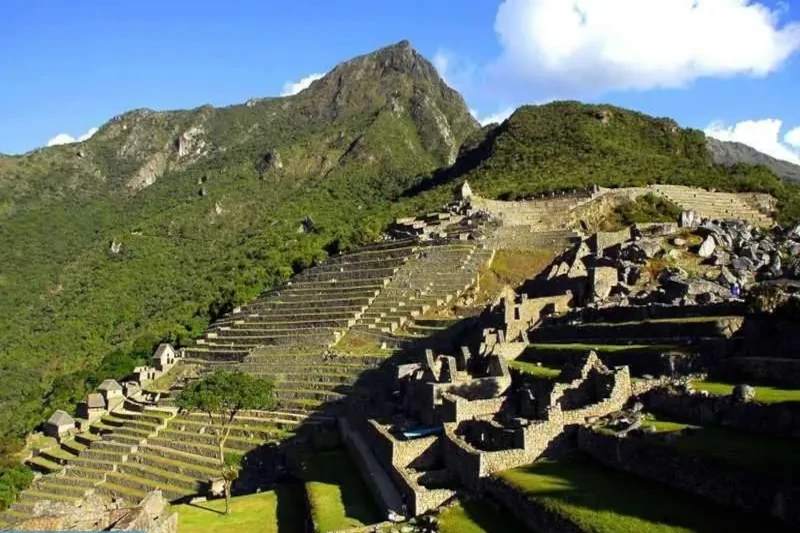
Some curious facts about Machu Picchu Mountain relate to the breathtaking views from its summit and surrounding viewpoints. Climbing Machu Picchu Mountain offers panoramic views of the Urubamba Valley, the citadel’s ridge, and the encompassing Andes. These unique panoramas from Machu Picchu Mountain allow travelers to appreciate the scale, layout, and harmony between the city and the landscape.
Ancient records mention that the Incas performed astronomical ceremonies from the high points of Machu Picchu Mountain. These references are part of the ancient records of Machu Picchu Mountain. For example, walls aligned with the solstices and celestial bodies have been discovered during excavations. These records add to the curious facts about Machu Picchu Mountain. They show that it served as an observatory, a sanctuary, and a natural lookout. Its name means ‘old mountain’ or ‘ancient peak’ in Quechua. This meaning reflects wisdom and continuity in the Andes.
Cultural Importance and World Heritage Recognition of Machu Picchu Mountain
<strong>Machu Picchu Mountain plays a central role in the cultural importance of Machu Picchu Mountain, forming part of the UNESCO World Heritage Site designated in 1983. Its value extends beyond the physical—it symbolizes harmony between nature, spirituality, and historical architecture. Among the curious facts about Machu Picchu Mountain is that researchers from various disciplines continue to study its structures and geology.</p>
It is also a major tourism site with strict regulations designed to protect both the citadel and the mountain. For visitors, knowing these details fosters respect and appreciation for the environment. Culturally, Machu Picchu Mountain is a symbol of Peru, Incan legacy, and human ingenuity in harmony with nature. Among the myths and realities of Machu Picchu Mountain, popular belief once called it “the lost city,” yet the reality is more complex—it was part of a larger, planned Incan network. Understanding this distinction is one of the most enlightening curious facts about Machu Picchu Mountain.
Comparison Between Machu Picchu Mountain and Other Sacred Mountains
To conclude, it’s worth placing Machu Picchu Mountain in context with other sacred mountains around the world. Many ancient sites combine elevation, spirituality, and architecture. However, Machu Picchu Mountain is unique in its dual peaks, integrated citadel, and Andean-jungle environment. This comparison between Machu Picchu Mountain and other sacred mountains highlights its rare blend of engineering, geology, spirituality, and landscape. Thus, one of the essential curious facts about Machu Picchu Mountain is its global uniqueness: it’s not just a peak but a complex with multiple layers of meaning.
Unlike most sacred mountains, Machu Picchu Mountain is not isolated—it’s part of a planned urban and agricultural system. In this sense, the comparison between Machu Picchu Mountain and other sacred mountains reinforces its singular role as both natural and cultural marvel.
10 + Specific Facts for Visitors
Here’s a list of curious facts about Machu Picchu Mountain that you can keep in mind for your visit:
-
Machu Picchu Mountain rises about 2,430 m (7,970 ft) above sea level, making it a high-jungle environment with moderate altitude.
-
Beneath the mountain lie tectonic faults that the Incas used to aid construction and drainage.
-
Stone blocks on Machu Picchu Mountain were cut precisely without mortar, thanks to the fractured granite base.
-
The agricultural terraces not only produced crops but also stabilized slopes and prevented erosion.
-
From the top of Machu Picchu Mountain, travelers enjoy unique panoramas of the Urubamba Valley, nearby peaks, and the mist-covered citadel.
-
The name “Machu Picchu” comes from Quechua, meaning “old mountain” or “ancient peak,” one of the curiosities about the name Machu Picchu.
-
The mountain’s cloud-forest microclimate supports rare orchids and exceptional biodiversity.
-
Magnetic anomalies detected under Machu Picchu Mountain result from its mineral-rich granite base, part of the scientific data about Machu Picchu Mountain.
-
It is part of a UNESCO World Heritage Sanctuary, underscoring its cultural importance.
-
The Incas selected the mountain for strategic, agricultural, and ritual reasons—it served as a lookout, sanctuary, and productive center.
-
Unlike many sacred peaks, Machu Picchu Mountain integrates city planning, terraces, and temples, setting it apart in global comparisons.
Travel Tips
To make the most of your visit to Machu Picchu Mountain, keep these tips in mind:
- Acclimate to the altitude before hiking—it’s moderate but still requires caution.
- Learn some curious facts about Machu Picchu Mountain beforehand; understanding its history enhances the experience.
- Visit at sunrise or sunset for the best light and unique panoramas.
- Respect preservation rules—the mountain’s terraces and forests are fragile.
- Prepare for changing weather conditions, including fog, rain, and temperature shifts.
Frequently Asked Questions
1. How high above sea level is the summit of Machu Picchu Mountain, and how difficult is the climb?
Machu Picchu Mountain reaches about 3,082 meters above sea level. The hike is moderate to challenging due to steep stone steps, taking around 1.5 to 2 hours to reach the top. The reward is a spectacular view of the Urubamba Valley and the surrounding Andes.
2. Does Machu Picchu Mountain have regulated hiking routes, or can visitors explore it freely?
The trail is fully regulated by the Ministry of Culture of Peru. Visitors must follow a single marked path with a daily limit of 400 hikers. Free exploration is not allowed to protect the mountain’s ecosystem and archaeological remains.
3. What archaeological evidence shows ritual use of Machu Picchu Mountain during Incan times?
Researchers have found ceremonial platforms and carved stones near the summit. These features show that the mountain served for rituals dedicated to the sun and sacred peaks, key parts of Inca spirituality.
4. How does the geology of Machu Picchu Mountain affect its preservation and visitor safety?
The mountain’s granite composition provides strength but also creates natural fractures. During the rainy season, the risk of erosion and small landslides increases. Authorities perform regular maintenance and trail monitoring.
5. What is the best time of year to enjoy clear panoramic views from Machu Picchu Mountain?
The dry season from May to October offers the clearest views and most stable weather. The best visibility occurs in the early morning hours, while the rainy months often bring fog and limited visibility.
For more information, please contact us.